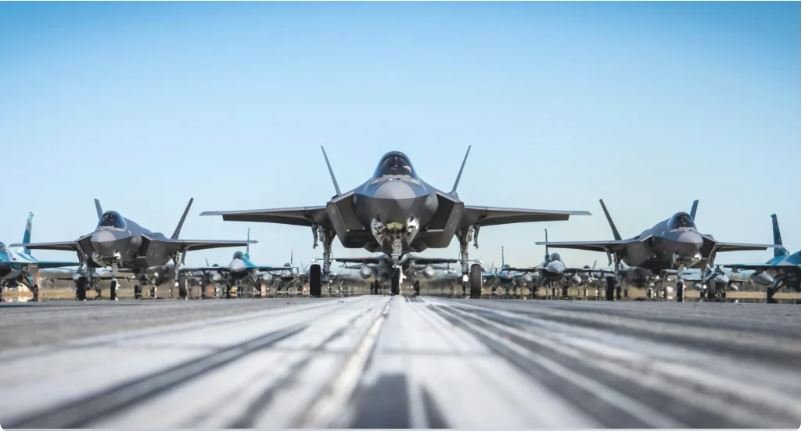
A Major Boost to Global Air Power Cooperation
In a significant move that highlights growing military coordination across continents, the Netherlands has joined the United States and Japan in a historic trilateral air force exercise featuring advanced F-35 stealth fighter jets. The exercise marks the first time Dutch fighter aircraft have deployed to Japan, signaling a new era of global defense collaboration.
What Is This Trilateral Exercise All About?
The joint drill, known as “Kazaguruma Guardian 2026”, is being conducted at Japan’s Misawa Air Base. It brings together three advanced air forces to train in high-end combat scenarios using fifth-generation fighter jets.
- Location: Misawa Air Base, Japan
- Duration: March 20 to April 3, 2026
- Participants:
- Netherlands Air Force
- United States Air Force
- Japan Air Self-Defense Force
This exercise is designed to improve joint operational capabilities, coordination, and tactical efficiency among allied nations.
Deployment Details: Who Brought What?
The scale of participation reflects the seriousness of the exercise. According to official data:
- Netherlands deployed 4–5 F-35A fighter jets and a tanker aircraft
- Japan contributed 8 F-35A jets and surveillance aircraft
- The United States deployed F-35s along with F-16 fighter jets
This mix allows forces to practice both stealth combat operations and traditional air defense missions.
Why This Exercise Matters
1. Strengthening Allied Interoperability
The primary goal is to ensure that the three nations can operate seamlessly in real combat situations. Pilots train to share data, coordinate strikes, and respond quickly to threats.
2. Expanding NATO’s Reach to Indo-Pacific
The Netherlands’ participation shows that European NATO allies are extending their presence beyond Europe into the Indo-Pacific region.
3. Preparing for Advanced Threats
The exercise focuses on countering modern fifth-generation fighter threats, improving readiness against technologically advanced adversaries.
4. Real-Time Combat Simulation
Joint missions include:
- Air combat drills
- Tactical coordination exercises
- Integrated surveillance and refueling operations
The Role of the F-35 Fighter Jet
At the center of this exercise is the F-35 Lightning II, one of the most advanced fighter jets in the world. It offers:
- Stealth capabilities (low radar visibility)
- Data fusion technology for real-time battlefield awareness
- Network-centric warfare capabilities
These features allow allied forces to operate as a unified system rather than separate units, which is critical in modern warfare.
A Strategic Message to the World
This trilateral exercise is more than just training—it sends a strong geopolitical signal:
- The U.S., Japan, and European allies are closely aligned on security issues
- Military cooperation is expanding across regions
- There is a clear focus on maintaining stability in the Indo-Pacific
Experts believe such exercises demonstrate that future conflicts will require coordinated multinational responses, not isolated efforts.
Final Thoughts
The participation of Netherlands F-35s alongside U.S. and Japanese forces marks a turning point in global defense collaboration. As military challenges become more complex, exercises like this ensure that allied nations remain ready, connected, and capable of responding together.
With cutting-edge technology like the F-35 and increasing cross-border cooperation, the future of air warfare is clearly becoming more integrated and globally coordinated than ever before.